This new scientific study investigated how muscle glycogen availability affects peak fat oxidation (PFO), the exercise intensity eliciting peak fat oxidation (Fatmax), and mitochondrial coupling control and efficiency (MCCE) in healthy, trained men.
Ten participants completed a randomized crossover trial involving a strenuous exercise-induced glycogen depletion protocol followed by either a high-carbohydrate or a low-carbohydrate diet. The researchers collected blood samples and muscle biopsies before conducting graded exercise tests on stationary bicycles to measure metabolic responses.
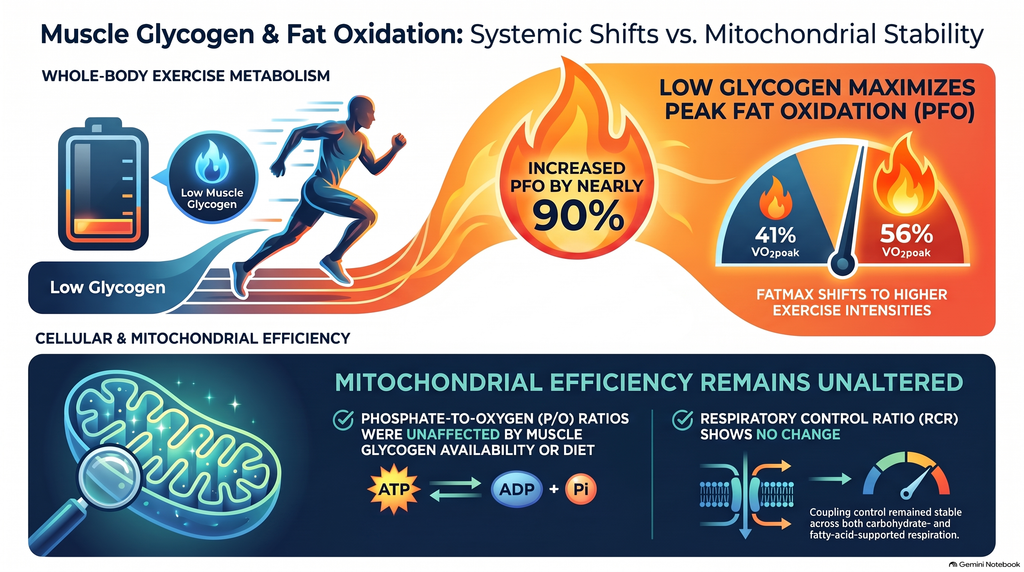
The results revealed that low muscle glycogen levels substantially increased peak fat oxidation and shifted Fatmax to higher exercise intensities. Conversely, intrinsic mitochondrial coupling control and efficiency remained unaffected by the carbohydrate manipulations.
Ultimately, the findings indicate that whole-body substrate oxidation during exercise is modulated by fuel availability rather than alterations in mitochondrial efficiency.
The full article covers the magnitude of the PFO and Fatmax shifts, the correlation between plasma free fatty acids and fat oxidation rates, the P/O ratio and RCR data underlying the MCCE findings, and what this separation between substrate selection and mitochondrial tuning means for carbohydrate periodization around training.
Unlock Premium Content
Get access to in-depth breakdowns with practical takeaways, interactive study guide quizzes, and earn certificates.
- ✓ Deep-dive articles translating research into practice
- ✓ 10-question study guides for every paper
- ✓ Earn certificates by completing topic bundles
- ✓ Access to full study archive and ebook library